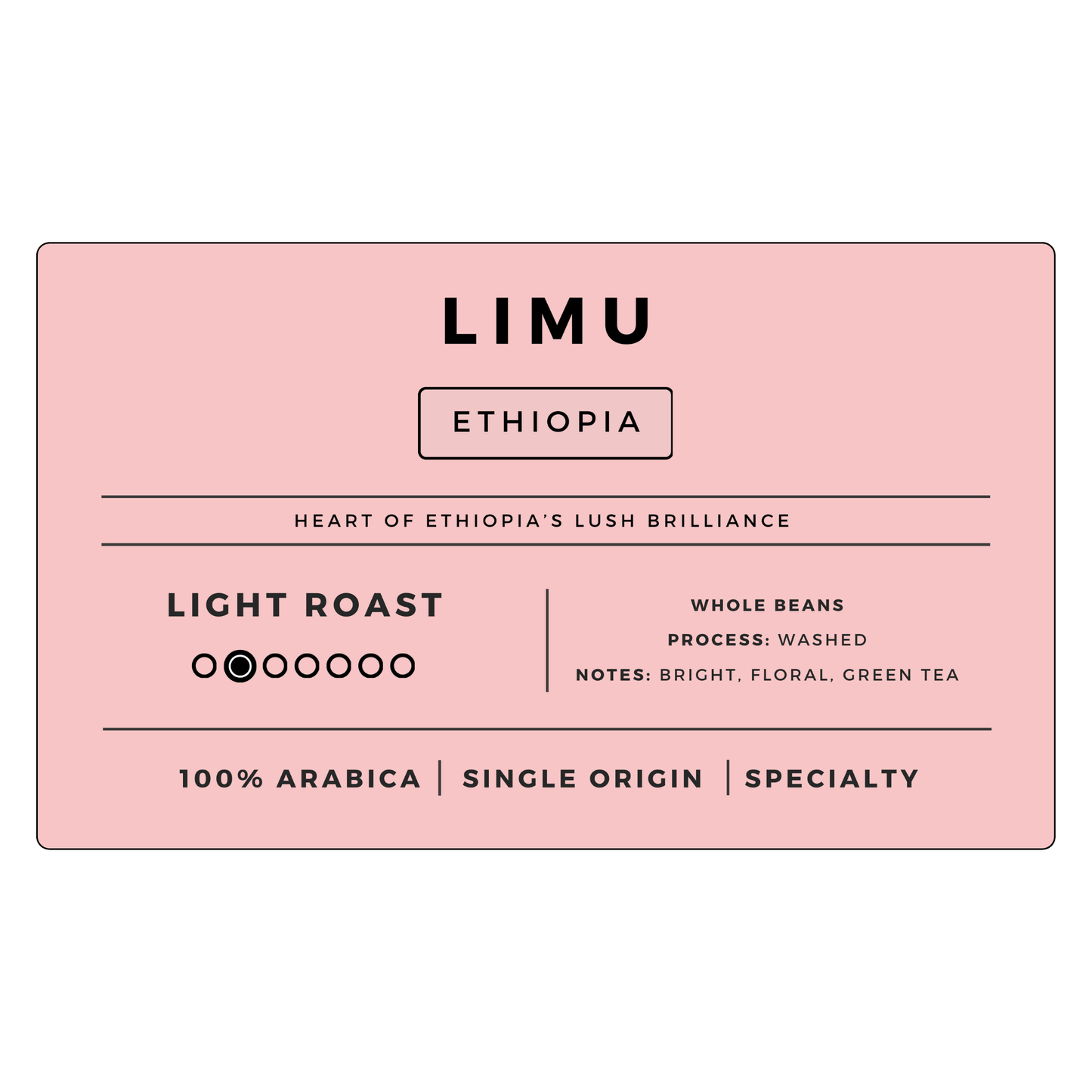


Ethiopia Limu is what coffee drinkers mean when they say a coffee drinks like tea. Light-bodied, low in acidity, and delicately floral, this washed process light roast from the southwestern highlands of Ethiopia produces a cup that is gentle, clean, and refined rather than bold or intense. Grown at 1,500 to 1,800 metres above sea level among ancient forest systems — the very birthplace of Arabica coffee — this single origin lot delivers bright floral aromatics, a green tea character, and a clean citrus lift in a cup that is easy to drink and hard to put down. 100% Arabica, 300g whole bean.
Roasted fresh in Scarborough, Ontario. Ships across Canada.
Cup profile +
Aroma
Jasmine, green tea, light citrus blossom
Tasting notes
Bright floral, green tea, citrus zest
Acidity
Gentle, clean, barely there
Body
Tea-like, delicate
Finish
Clean, soft, lingering floral
About this coffee +
Ethiopia is where Arabica coffee began, and the Limu zone in the southwestern highlands of Oromia is one of its most fertile and historically significant growing areas. Smallholder farmers here grow coffee under dense forest canopies at 1,500 to 1,800 metres above sea level, in the same forest ecosystems where wild Arabica has grown for centuries. The shade-grown environment and high elevation slow cherry maturation, producing beans with a delicate, layered complexity that is native to this landscape and nowhere else.
Washed processing is what gives this lot its tea-like character. After harvest the cherry skin is removed immediately and the beans are fermented in water before drying on raised beds. With no fruit left on the bean during drying, the cup comes out clean and precise. What you taste is the bean itself — the floral aromatics, the gentle citrus, the soft green tea quality — without any added sweetness or body from the processing method.
If you find most coffees too heavy, too bitter, or too acidic, Ethiopia Limu is the answer. The light body and low acidity make it exceptionally easy to drink across the day. It performs best through filter brewing methods — pour-over, Chemex, or Aeropress — where the delicate floral and tea-like notes come through fully. Think of it less as a conventional coffee and more as the most refined cup you will have all week.
Specifications +
Origin
Ethiopia
Region
Limu, Oromia
Process
Washed
Roast level
Light
Altitude
1,500 to 1,800 masl
Variety
Mixed Heirloom
Species
100% Arabica
Grade
Specialty
Format
Whole Bean
Net weight
300g
Frequently asked questions +
Why is Ethiopian Limu described as tea-like coffee?
Limu's light body and low acidity give it a delicate, fluid texture that is closer to a fine green tea than to a conventional espresso-style coffee. The washed process removes all fruit influence during drying, leaving behind the bean's natural floral and herbal character without added weight or sweetness. Combined with a light roast that preserves rather than transforms the bean's original qualities, the result is a cup that is gentle, clean, and easy to drink at any time of day.
What makes Ethiopian Limu different from Yirgacheffe?
Yirgacheffe is Ethiopia's most well-known origin and tends toward more intense floral and berry-forward profiles at higher acidity. Limu is subtler — cleaner, softer, and more balanced. Where Yirgacheffe can be assertive and complex, Limu is refined and approachable. Both are washed and both are light-bodied, but Limu is the better choice for drinkers who want floral character without the brightness turning sharp.
What is the best brewing method for this coffee?
Pour-over, Chemex, and Aeropress are the best methods for Ethiopia Limu. These filter brewing methods highlight the clean floral aromatics and tea-like body without adding heaviness. Use water around 90 to 92 degrees Celsius and a medium-fine grind. Avoid French press for this lot — full immersion brewing adds body and can obscure the delicate character that makes Limu distinctive.
How should I store whole bean coffee?
Store in a sealed bag away from heat, light, and moisture. The resealable bag with one-way valve maintains freshness between uses. For best results, grind immediately before brewing and use within 4 to 5 weeks of receiving your bag.