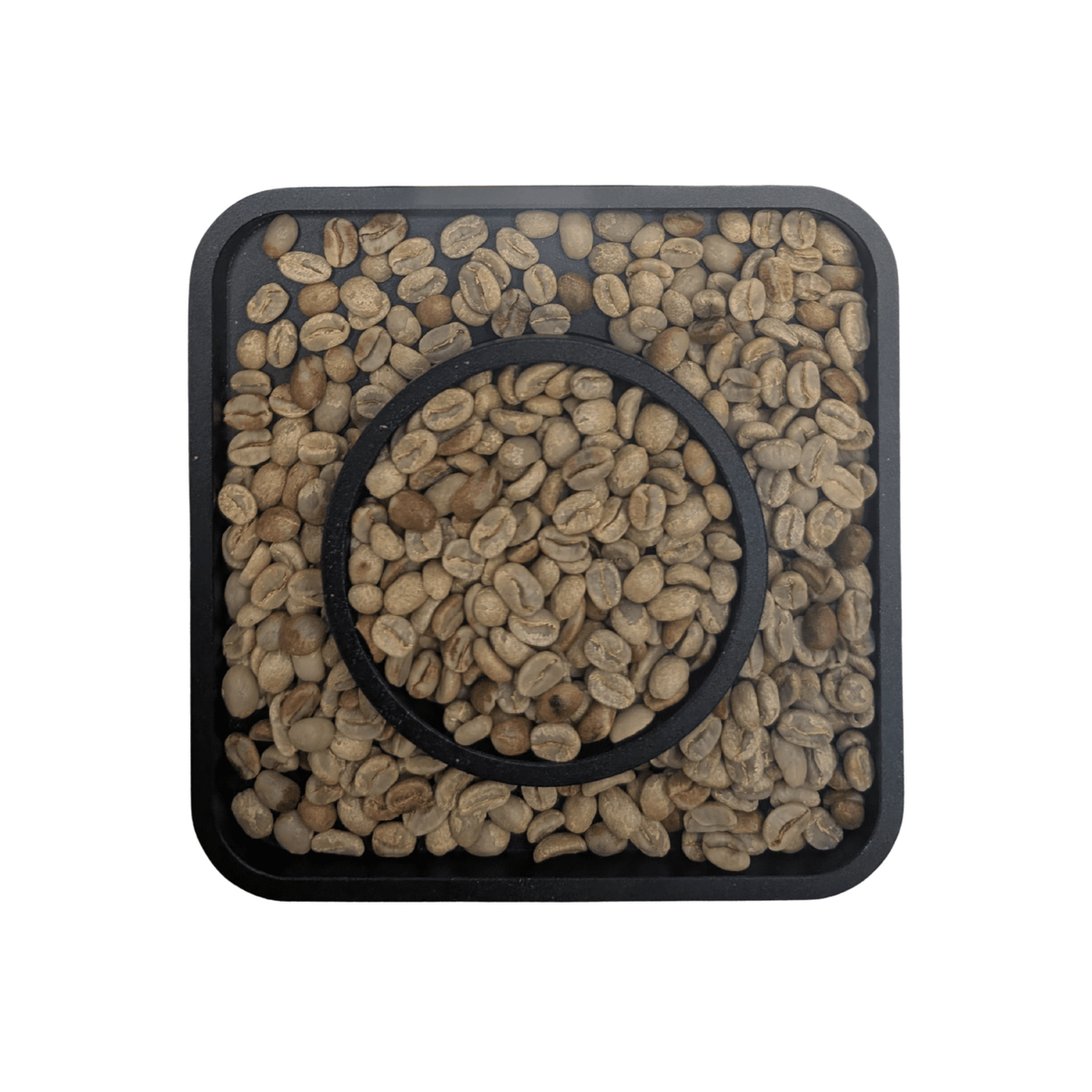

Costa Rica Tarrazu El Cipres Red Honey is a single-farm microlot green coffee from Finca El Cipres in Llano Bonito, León Cortez, deep within Tarrazu, Costa Rica's most celebrated coffee-growing region. Grown at 1800 metres above sea level and harvested December through January, this 100% Caturra lot is processed using the red honey method, where a significant portion of the fruit's mucilage is left on the parchment during an extended drying period rather than washed away entirely. As a true microlot, this coffee traces back to one farm and one harvest lot alone — a limited batch available while supplies last. Available in 1 lb, 2.5 lb, 10 lb, 15 lb, and 30 lb.
Ships across Canada.
Cup profile +
Full cupping notes for this microlot are being finalized and will be added here once evaluation is complete. In the meantime, feel free to contact us for the latest tasting notes on this lot.
Roasting guide +
Honey processed coffee carries more surface sugar than washed coffee, though less than a full natural. Treat it with the same caution as a light natural: allow a thorough drying phase, keep heat moderate through the early stages, and avoid rushing to first crack, or the retained mucilage sugars can scorch and produce a harsh, tipped bean. This Caturra lot rewards a patient, controlled roast.
Light-medium roast
Drop just after first crack. Preserves the most delicate, detailed expression of the honey process. Best for pour-over and filter where process character can be tasted clearly.
Medium roast
Drop 45 seconds after first crack. A balanced, versatile roast level that builds sweetness and body. Works well across filter and single origin espresso.
Medium-dark roast
Drop 70 to 75 seconds after first crack. Heaviest body of the three levels. Development this far tends to mask the delicate qualities honey processing is prized for — recommended only if you specifically want a bolder, roast-forward cup.
About this coffee +
Finca El Cipres is a family-owned farm in Llano Bonito, in the Leon Cortez canton of Tarrazu — Costa Rica's most internationally recognised coffee-growing region, known for high altitude, volcanic soils, and a distinct dry season that supports careful sun-drying processes like honey. The farm takes its name from a centenary cypress tree planted on the property in 1938, which the Mora family regard as both a living link to their history and the farm's unofficial emblem.
The Mora family has cultivated coffee here for generations. In the 1980s, Jesus Mora began expanding production as global coffee cultivation grew, but by the 1990s the family shifted deliberately toward sustainable, eco-friendly farming practices. Today Jesus Mora works alongside his wife Eli María Solano and their children, prioritising quality over volume and processing their harvest through multiple methods — honey, red, yellow, and washed — to capture different expressions of the same Caturra trees. For the Mora family, coffee is not simply a business but a generational craft, carried forward from their grandparents and shared, cup by cup, with drinkers around the world.
This lot is red honey processed — a method that sits between yellow honey and black honey in the amount of mucilage retained on the parchment during drying. More mucilage means a longer drying period and more sugar available to develop flavour in the bean. As a designated microlot, this coffee is kept fully separate from the farm's other lots throughout processing and export — every bag traces back to this single harvest at Finca El Cipres, nothing blended in.
Specifications +
Origin
Costa Rica
Region
Llano Bonito, León Cortez, Tarrazú
Farm
Finca El Cipres
Process
Red Honey
Designation
Microlot
Species
100% Arabica
Variety
Caturra
Altitude
1,800 masl
Harvest
December to January
Recommended roast
Light-medium, medium
Available sizes
1 lb, 2.5 lb, 10 lb, 15 lb, 30 lb
Density: 1049 g/l, Moisture: 10.1%, Water Activity: 0.67 Aw
Frequently asked questions +
What is honey processed coffee, and what does "red" honey specifically mean?
Honey processing removes the cherry skin but leaves some or all of the sticky mucilage layer on the parchment during drying — unlike washed coffee, which removes the mucilage entirely, or natural coffee, which dries the whole cherry intact. Honey processes are graded by colour based on how much mucilage is retained and how long the coffee dries: white and yellow honey retain the least and dry fastest, red honey retains a moderate to significant amount and dries longer, and black honey retains the most and dries longest. Red honey typically produces a fuller body and more pronounced sweetness than yellow honey, while staying cleaner than black honey.
What does "Microlot" mean on this coffee, and is it a certification like organic or fair trade?
Microlot is not a certification in the organic or fair trade sense — it is a designation confirming this coffee comes from a single, separately processed harvest lot rather than being blended with other lots from the same farm or region. Microlots are typically small in volume, carefully processed, and kept fully traceable from farm to export. This designation also means quantity is genuinely limited — once this batch sells through, it will not be replaced by the same lot until the next harvest.
Why is Tarrazú considered such an important coffee region in Costa Rica?
Tarrazú, in Costa Rica's Central Valley highlands, is the country's most internationally recognised specialty coffee region. High altitude, volcanic soil, and a pronounced dry season create ideal conditions for both growing dense, slow-matured cherries and for the extended sun-drying that honey and natural processes require. Many of Costa Rica's most awarded microlots and competition-winning coffees originate from farms in and around Tarrazú, including the León Cortez canton where Finca El Cipres is located.
How should I store this green coffee?
Store in a cool, dry place away from direct light and moisture. Green coffee is stable for 12 to 18 months in correct storage conditions. We ship all our green coffee in 9 layer hermetic Ecotact bags to preserve moisture content and the aromatic character of this lot between roasting sessions.