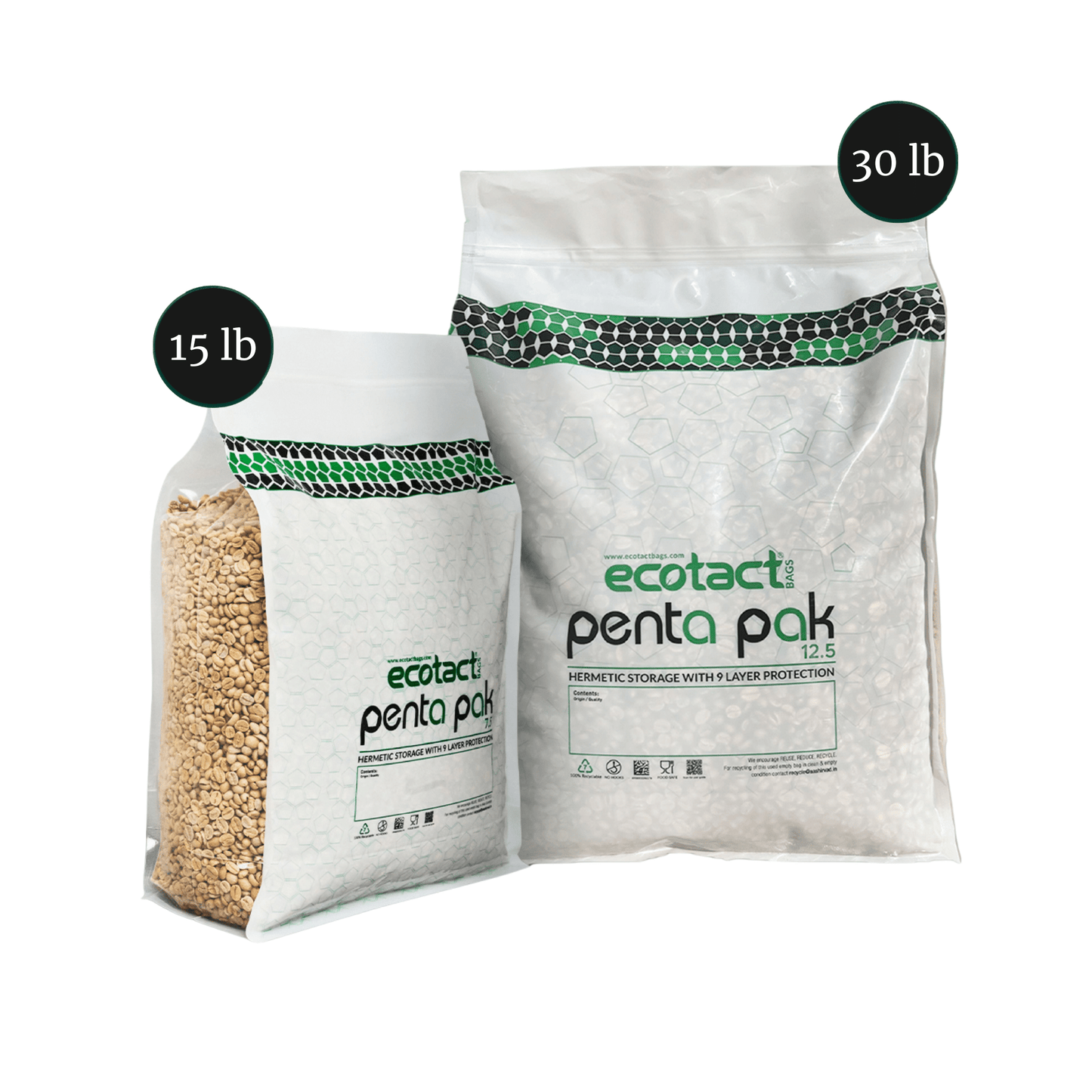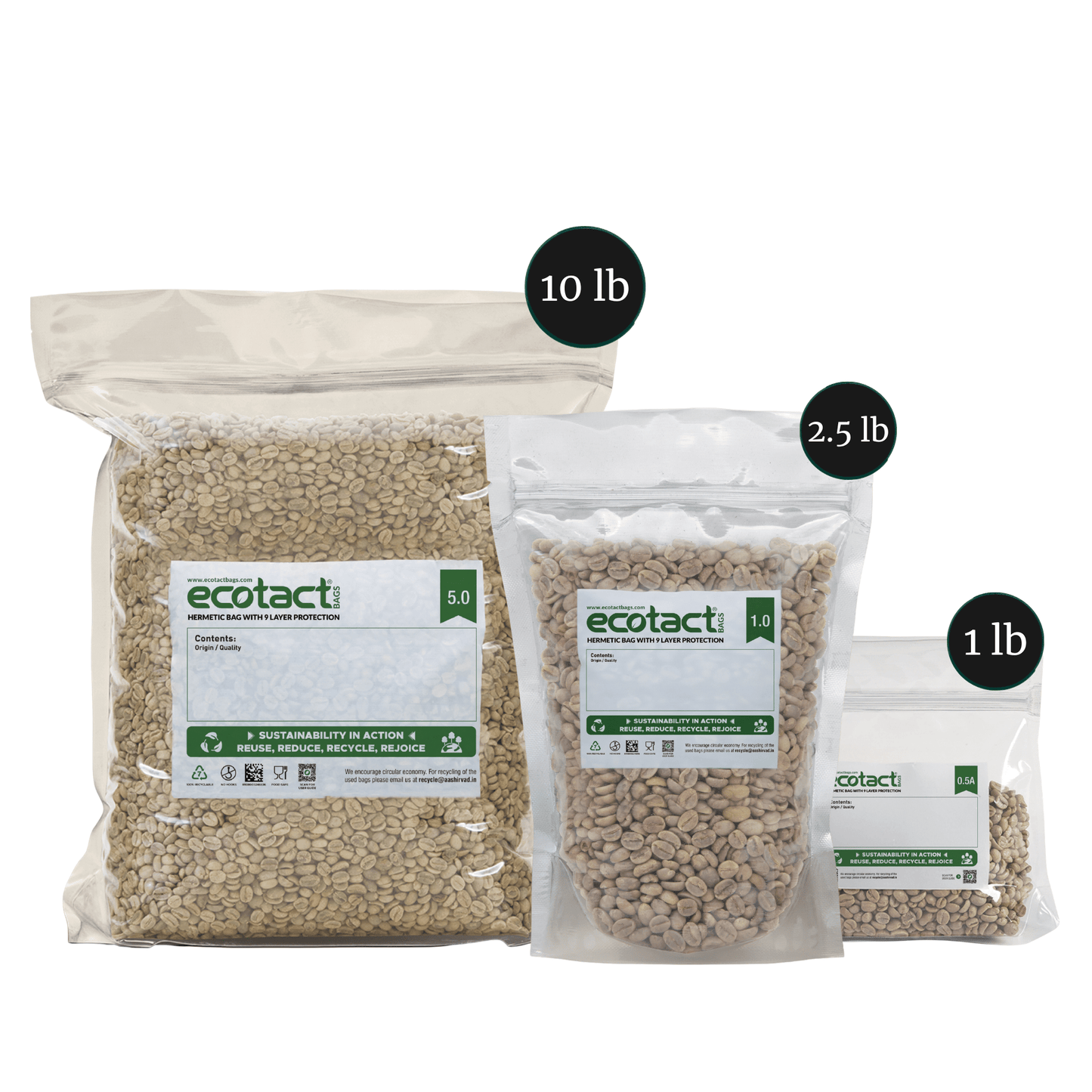

Colombia Sugarcane EA Decaf is back with a fresh 2025/26 harvest, and it comes from a new address within Colombia's coffee heartland: Chinchina, in the Caldas department of the Eje Cafetero. Our previous lot, sourced from nearby Manizales, sold out completely — this replacement lot is decaffeinated using the same ethyl acetate sugarcane method, one of the most flavour-preserving natural decaffeination processes in specialty coffee, and it delivers a genuinely excellent decaf cup: cocoa, sugarcane sweetness, ripe fruit, banana, apple, and vanilla, with balanced medium citric acidity and a clean, rounded body. Grown across Castillo and Colombia varieties at 1,300 to 1,800 metres above sea level, this lot scored SCA 84.5 — squarely in the excellent specialty tier for any coffee, decaffeinated or not. 100% Arabica. Available in 1 lb, 2.5 lb, 10 lb, 15 lb, and 30 lb.
Ships across Canada. Wholesale supply available.
Cup profile +
Aroma
Cocoa, sugarcane sweetness, ripe fruit
Tasting notes
Cocoa, sugarcane, ripe fruit, banana, apple, vanilla
Acidity
Clean, balanced, gentle
Body
Rounded, clean, well-structured
Finish
Sweet, vanilla-toned, clean lingering sugarcane
Roasting guide +
Decaffeinated green coffee behaves differently from caffeinated green in the roaster. The EA sugarcane process alters the bean structure slightly, making decaf greens more porous and prone to faster surface development. Use a lower charge temperature than you would for a comparable caffeinated Colombian green, reduce airflow slightly in the drying phase, and watch development carefully — decaf beans can tip or scorch more easily at high temperatures. First crack on decaf tends to be quieter and less defined than caffeinated coffee.
Light to medium roast
Drop just after first crack. Ripe fruit and apple brightest. Sugarcane sweetness comes through cleanly. Best for filter, pour-over, and AeroPress.
Medium roast
Drop 30 to 45 seconds after first crack. Cocoa and vanilla develop fully. Banana sweetness rounds out. The most balanced and versatile roast level for this lot — suitable for espresso and drip.
Medium-dark roast
Drop 60 to 70 seconds after first crack. Dark chocolate and vanilla-toned sweetness deepen. Good for decaf espresso programs where body and sweetness are the priority.
Dark roast is not recommended for this lot. The clean, balanced acidity and layered fruit character that earned SCA 84.5 are the defining qualities of this decaf green. Pushing past medium-dark development reduces the cup to roast-forward character and sacrifices the origin complexity that makes this lot exceptional.
About EA sugarcane decaffeination +
Ethyl acetate (EA) sugarcane decaffeination is a natural-solvent process that uses ethyl acetate derived from the fermentation of Colombian sugarcane molasses. Because the EA is produced from a natural agricultural byproduct rather than synthesised from petrochemicals, the process is widely regarded as one of the most natural and coffee-friendly decaffeination methods available. The green beans are steamed to open their pores, then washed repeatedly with the EA solution, which bonds selectively with caffeine molecules and draws them out of the bean. The beans are then steamed again to remove any residual EA, and dried.
The key advantage of the EA sugarcane method over Swiss Water or CO2 decaffeination is flavour retention. The EA process is highly selective for caffeine and leaves the majority of the bean's aromatic compounds and sugars intact — which is why EA sugarcane decaf consistently outperforms other decaffeination methods at specialty cupping. Colombia is the natural home of this method because both the sugarcane and the coffee are produced domestically, making it an integrated and traceable process within the Colombian coffee supply chain.
About this coffee +
This lot is sourced from Chinchina, a municipality in the Caldas department that sits within Colombia's Eje Cafetero, the historic coffee heartland of the country and neighbour to the Manizales area our previous decaf lot came from. Grown at 1,300 to 1,800 metres above sea level across Castillo and Colombia varieties — two Cenicafé-developed cultivars prized for disease resistance and consistent cup quality — the base green coffee was selected for its clean structure and suitability for the EA decaffeination process before treatment was applied.
The 2025/26 harvest lot scored SCA 84.5, placing it in the excellent tier of specialty classification — a genuinely strong result for a decaffeinated coffee, where flavour loss during processing typically pulls scores down. Density measured at 1,087 g/L and water activity at 0.595 confirm a well-structured, properly dried green coffee, with moisture between 11.5% and 11.9%. The lot is well-sorted by screen size, split between 17/18 (43%) and 15/16 (57%), giving reasonably consistent bean size for even roasting.
For roasteries seeking a specialty decaf green coffee that performs at single origin level, this Chinchina lot continues the standard our previous Manizales decaf set before selling out. For home roasters exploring decaf green coffee for the first time, the EA sugarcane process and the clean, layered flavour profile make this an accessible and rewarding starting point.
Specifications +
Origin
Colombia
Region
Chinchina, Caldas
Process
EA Sugarcane Decaffeination
SCA score
84.5
Harvest
2025/26 — New crop
Altitude
1,300 to 1,800 masl
Variety
Castillo, Colombia
Screen size
17/18 (43%) and 15/16 (57%)
Species
100% Arabica
Caffeine
Decaffeinated
Density
1,087 g/L
Water activity
0.595
Moisture
11.5% to 11.9%
Available sizes
1 lb, 2.5 lb, 10 lb, 15 lb, 30 lb
Wholesale
hello@unitedbeans.ca
Frequently asked questions +
Is this the same decaf as before, or a different lot?
This is a fresh harvest replacing our previous Manizales-area decaf, which sold out completely. The new lot comes from Chinchina, a neighbouring municipality within the same Caldas department and Eje Cafetero coffee region, decaffeinated using the identical EA sugarcane method. Flavour notes have shifted slightly with the new crop — cocoa, sugarcane, ripe fruit, banana, apple, and vanilla — but the process, quality standard, and specialty-grade EA decaffeination that made the previous lot exceptional carry through unchanged.
What is EA sugarcane decaffeination and is it natural?
Ethyl acetate (EA) sugarcane decaffeination uses ethyl acetate produced from the fermentation of Colombian sugarcane molasses — a natural agricultural byproduct — rather than petrochemical synthesis. The EA solution selectively extracts caffeine from the green bean while leaving the majority of aromatic compounds and sugars intact. After decaffeination the beans are steamed to remove residual EA and dried. Because the solvent is derived from sugarcane rather than a synthetic source, this method is widely accepted in the specialty coffee industry as a natural decaffeination process.
How do I roast decaf green coffee differently from regular green coffee?
Decaf green coffee is more porous than caffeinated green because the decaffeination process opens the bean structure. This means decaf absorbs heat faster and develops more quickly in the roaster. Use a lower charge temperature than you would for a comparable caffeinated Colombian green, keep airflow moderate during drying, and watch development time carefully. First crack on decaf is often quieter and less defined — rely on temperature and time rather than sound alone. Drop earlier than you think necessary on your first roast and adjust from there.
How should I store this green coffee?
Store in a cool, dry place away from direct light and moisture. Green coffee is stable for 12 to 18 months in correct storage conditions. Decaf green coffee is generally somewhat less shelf-stable than caffeinated green due to the structural changes from decaffeination. We ship all our green coffee in 9 layer hermetic Ecotact bags to preserve moisture content and the aromatic character of this lot between roasting sessions.